
Weeknight Vegetable Stir-Fry with Rice Noodles and Peanut Sauce: A 30-Minute Cook-Along

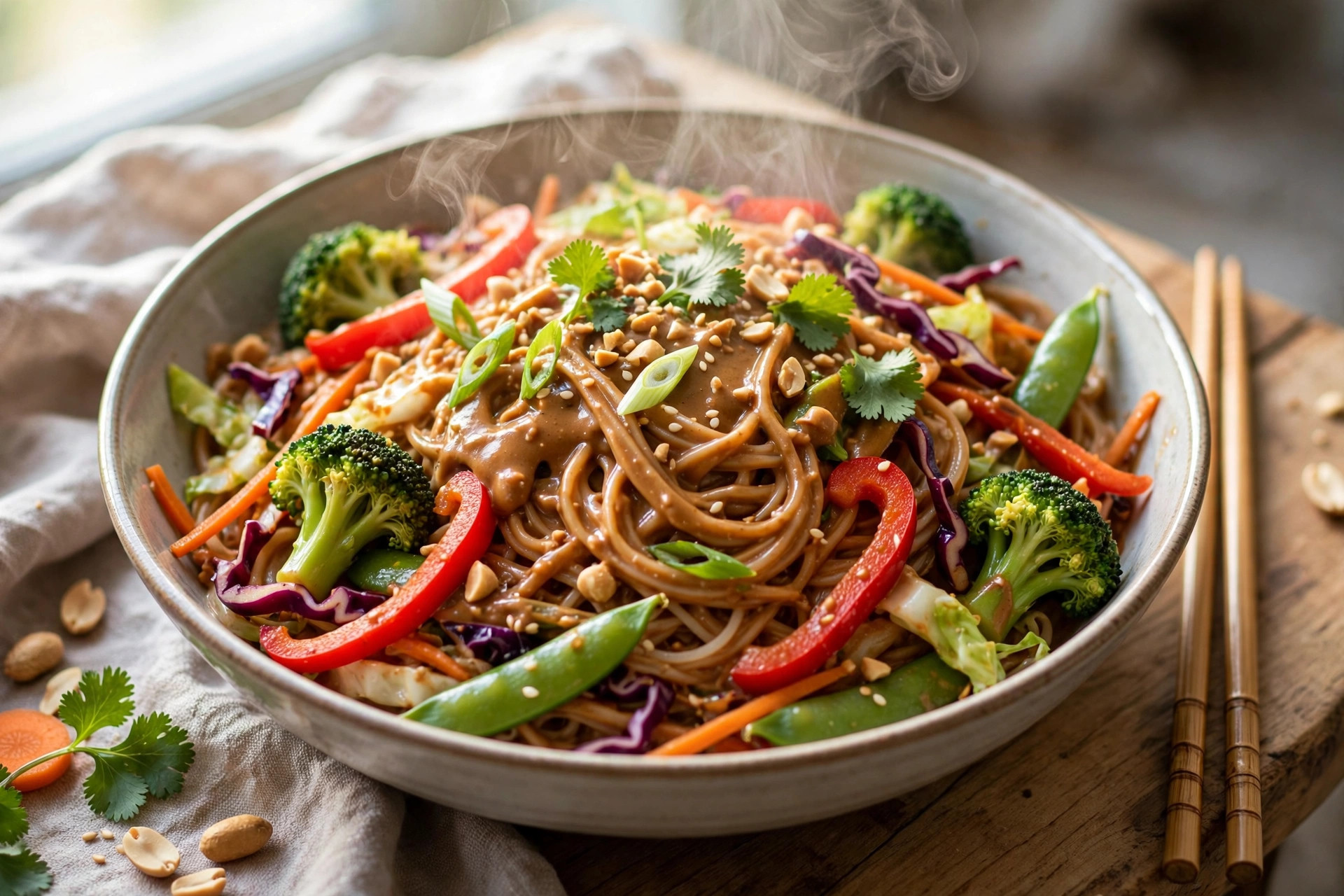
This is a cook-along recipe, which means you can read it once, then cook it in real time, following the minute-by-minute guide below. A vegetable stir-fry with rice noodles and peanut sauce is one of the most useful weeknight meals there is: it uses up vegetables from the fridge, it is ready in about 30 minutes, and it is easy to change with the seasons. The key is preparation. Once the wok is hot, everything moves fast, so chop everything first, mix the sauce before you start cooking, and keep the noodles ready to go.
Ingredients for 4 servings
For the stir-fry, you will need 250 grams of dried rice noodles, 2 tablespoons of vegetable oil, 1 large onion, sliced, 3 garlic cloves, finely chopped, 1 tablespoon of grated fresh ginger, 2 carrots, cut into thin matchsticks, 1 red pepper, sliced, 200 grams of broccoli florets, 150 grams of sugar snap peas, 100 grams of baby corn, halved lengthways, and 4 spring onions, sliced, for garnish. You will also need a handful of chopped roasted peanuts and a lime, cut into wedges, to serve.
For the peanut sauce, whisk together 4 tablespoons of smooth peanut butter, 3 tablespoons of soy sauce, 2 tablespoons of rice vinegar, 1 tablespoon of honey, 1 tablespoon of sesame oil, 1 teaspoon of chilli flakes, or less if you prefer it mild, and 4 to 5 tablespoons of warm water, added a spoonful at a time, until the sauce is thick but pourable. Taste it before cooking: it should be salty, a little sweet, and a little sharp. If it tastes flat, add a squeeze of lime juice. If it is too thick, add another tablespoon of water.
Before you start: 15 minutes of preparation
Put a large pot of water on to boil for the noodles. While it heats, chop all the vegetables and put them in separate piles on a plate or a tray, in the order you will cook them: onion and garlic first, then carrots and broccoli, then pepper, sugar snap peas and baby corn. This order matters, because the harder vegetables need longer in the pan. Mix the peanut sauce in a small bowl and set it aside. When the water boils, cook the rice noodles according to the packet, usually 4 to 6 minutes, then drain them, rinse them briefly under cold water to stop them sticking, and toss them with 1 teaspoon of sesame oil.
The cook-along: minutes 0 to 15
Minute 0: Heat a large wok or a wide frying pan over a high heat until it is very hot. Add 1 tablespoon of vegetable oil and swirl it around the pan. Minute 1: Add the onion and stir-fry for 2 minutes, stirring constantly, until it softens and starts to colour at the edges. Minute 3: Add the garlic and ginger and stir for 30 seconds, until fragrant. Do not let the garlic brown, or it will taste bitter. Minute 4: Add the carrots and broccoli with a splash of water, about 2 tablespoons, and stir-fry for 3 minutes. The water creates a little steam, which helps the broccoli cook without burning.
Minute 7: Add the red pepper, sugar snap peas and baby corn, and stir-fry for another 3 minutes. The vegetables should still have a little bite; a stir-fry that is cooked until completely soft loses its appeal. Minute 10: Push the vegetables to the sides of the pan, add the remaining tablespoon of oil to the centre, and add the drained noodles. Toss everything together for 1 minute so the noodles heat through. Minute 11: Pour over the peanut sauce, a little at a time, tossing continuously, until everything is coated. If the sauce thickens too much in the hot pan, add a splash of water. Minute 13: Taste a noodle and a piece of broccoli, and adjust the seasoning: a little more soy sauce for saltiness, a squeeze of lime for sharpness, or a pinch of chilli flakes for heat. Minute 14: Take the pan off the heat, scatter over the spring onions and chopped peanuts, and serve immediately in warm bowls, with lime wedges on the side.
Wok tips that make a difference
First, do not overcrowd the pan. If you are cooking for more than four people, cook the vegetables in two batches and combine them at the end, or use a very large pan. Second, keep the heat high and keep things moving; a stir-fry is not a stew, and the vegetables should sizzle, not simmer. Third, cut everything to a similar size so it cooks evenly, and cut harder vegetables smaller than softer ones. Fourth, have everything ready before the pan gets hot, because there is no time to chop an onion while garlic is browning. Finally, do not be afraid of a little charring on the edges of the vegetables; those browned bits add a great deal of flavour.
Variations for different weeks
Swap the rice noodles for 300 grams of cooked udon noodles, or for 250 grams of dried egg noodles, cooked according to the packet. Replace the peanut sauce with a simpler soy and ginger sauce: 4 tablespoons of soy sauce, 2 tablespoons of rice vinegar, 1 tablespoon of sesame oil, 1 tablespoon of honey and 1 tablespoon of grated ginger, whisked together. Add protein if you like: 400 grams of firm tofu, pressed and cubed, fried in oil for 5 minutes until golden before the vegetables go in; or 2 beaten eggs, scrambled in the pan after the vegetables and broken up with a spatula before the noodles are added. In summer, add courgette and green beans; in winter, add shredded cabbage and mushrooms. The method stays the same, whatever vegetables you use.
Leftovers and packing for lunch
Leftover stir-fry keeps well in the fridge for 2 days in a covered container. Reheat it in a pan over a medium heat with a splash of water, stirring, until it is piping hot, rather than in the microwave, which can make the noodles clump. It also packs well for lunch: let it cool completely, pack it in a container with a lime wedge and a small pot of extra peanut sauce, and eat it at room temperature or reheated. If you are packing it for a child, leave out the chilli flakes and serve the sauce on the side for dipping.
A good stir-fry is less about a perfect recipe and more about a good routine: chop first, sauce ready, pan hot, vegetables in order, noodles last. Once that routine is familiar, this meal becomes one you can cook without thinking, on the busiest of evenings, with whatever vegetables happen to be in the fridge. That is exactly the kind of recipe a busy household needs.
Please note: this article is general food information only and is not medical advice. Adjust quantities, ingredients and spice levels to suit your own tastes, dietary needs and household, and take care with hot oil and a hot pan.