
Slow Sunday Tomato and Herb Pasta Sauce: A Batch-Cooking Guide for Busy Weeks

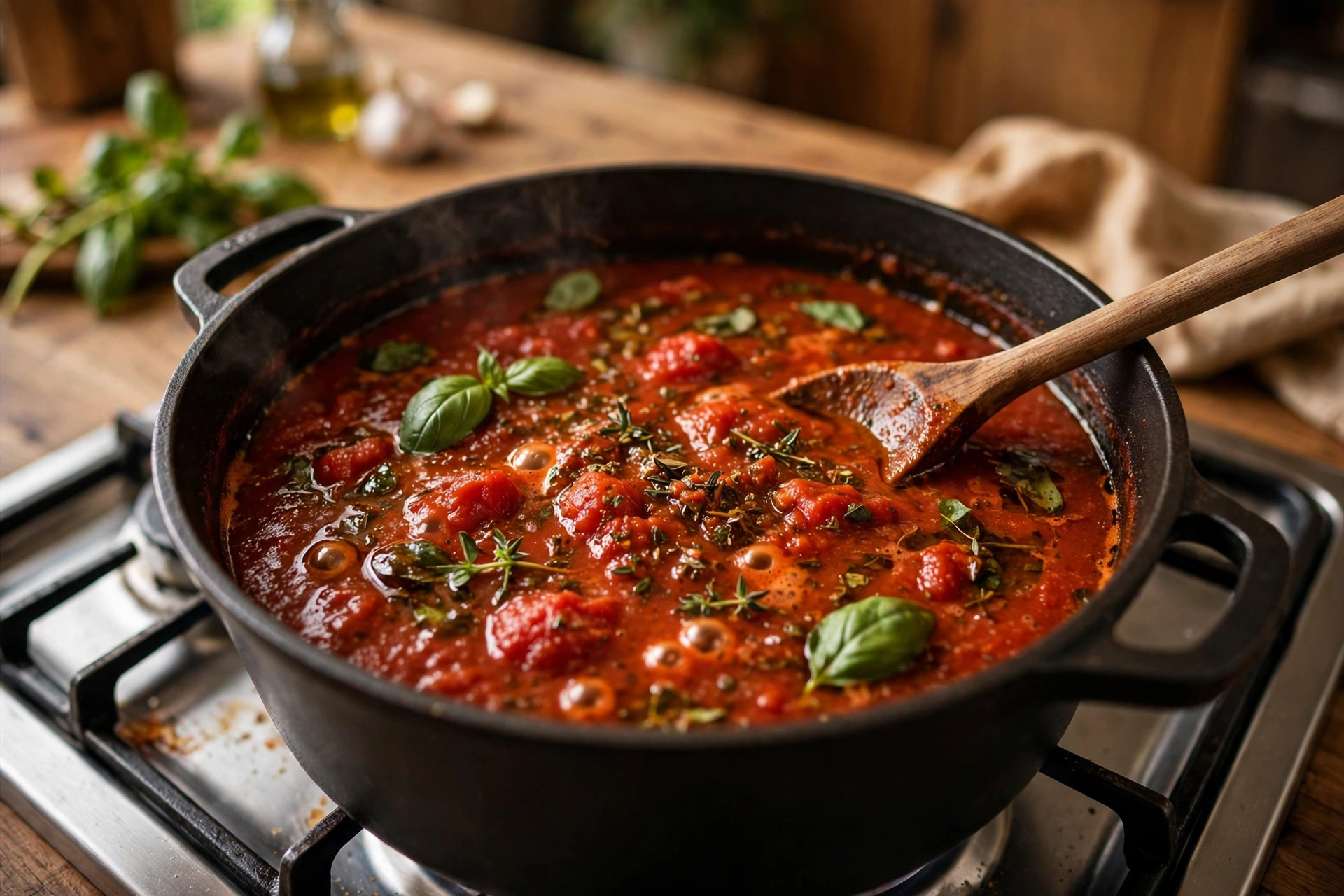
A jar of good tomato sauce is one of the most useful things a home cook can have in the fridge or freezer. This slow Sunday version takes about two hours, but almost all of that time is gentle simmering, and it makes enough sauce for four meals. The result is rich, smooth and deeply flavoured, without any complicated technique. Make it on a Sunday afternoon, use some that evening, and freeze the rest in portions for nights when cooking from scratch is not realistic.
Why batch-cook sauce?
Batch cooking works because the effort of chopping onions, opening tins and washing a pot is almost the same whether you make one portion or four. A double batch also tastes better than a small one, because a larger pot simmers more gently and the flavours have time to develop. Portioned sauce turns a plain bowl of pasta, a tray of roasted vegetables, or a simple chicken dish into a complete meal in the time it takes to boil pasta. It also reduces the temptation to buy ready-made sauces, which are often high in added sugar and salt, and it lets you control exactly what goes in.
Ingredients for about 2 litres of sauce
You will need 3 tablespoons of olive oil, 2 large onions, finely chopped, 6 garlic cloves, thinly sliced, 2 carrots, finely diced, 2 celery sticks, finely diced, 2 tablespoons of tomato puree, 4 tins of chopped tomatoes, 400 grams each, 2 teaspoons of sugar, 2 teaspoons of dried oregano, 1 teaspoon of dried basil, 2 bay leaves, 1 teaspoon of sea salt, half a teaspoon of black pepper, and a large handful of fresh basil leaves, torn, to finish. You will also need a large, heavy-based pot with a lid, a wooden spoon, and clean containers or freezer bags for storing the finished sauce.
Method, step by step
Heat the olive oil in the pot over a medium heat. Add the onions, carrots and celery, with a pinch of salt, and cook gently for 12 to 15 minutes, stirring occasionally, until the vegetables are soft and sweet-smelling, but not browned. This slow softening, sometimes called a soffritto, is the foundation of the sauce, so do not rush it. If the vegetables start to catch, add a splash of water and reduce the heat.
Add the sliced garlic and cook for 1 minute, until fragrant. Stir in the tomato puree and cook for another 2 minutes, stirring constantly, until it darkens slightly; this removes the raw, tinny taste that tomato puree can have. Pour in the chopped tomatoes, including their juices, and add the sugar, oregano, dried basil, bay leaves, salt and pepper. Stir well, scraping up any browned bits from the base of the pot, and bring the sauce to a gentle simmer.
Reduce the heat to low, put the lid on slightly ajar so steam can escape, and simmer for 90 minutes, stirring every 15 to 20 minutes. The sauce should bubble gently, not boil vigorously, and it will thicken and darken as it cooks. If it becomes too thick, add 100 millilitres of water at a time. If it is still thin after 90 minutes, take the lid off for the last 20 minutes so more liquid evaporates. Remove the bay leaves, taste, and adjust the seasoning: a little more salt, a pinch of sugar if the tomatoes are sharp, or a splash of balsamic vinegar if you want a deeper flavour. Stir in the torn fresh basil just before serving or storing, because it loses its brightness if it cooks for a long time.
Blending, or not?
This sauce is good left chunky, with visible pieces of carrot and celery, and that is how many cooks prefer it for pasta. If you want a smoother sauce, for example for pizza bases or for children who dislike visible vegetables, blend it in batches with a stick blender or a jug blender, taking care with hot liquid, and return it to the pot to heat through. A half-blended sauce, where you blend about half and stir it back into the rest, gives you the best of both: a smooth body with some texture remaining. There is no right answer here; it is purely a matter of taste and what you plan to use the sauce for.
Four meals from one pot
Meal one is the simplest: cook 500 grams of pasta, such as penne or rigatoni, in a large pot of salted boiling water, drain it, reserving a cup of the cooking water, and toss the pasta with about 600 millilitres of sauce and a splash of the cooking water, which helps the sauce cling. Serve with grated parmesan and black pepper.
Meal two is a vegetable bake: layer 600 millilitres of sauce with 500 grams of roasted aubergine and courgette slices and 200 grams of grated mozzarella in an ovenproof dish, top with breadcrumbs and parmesan, and bake at 190 degrees Celsius for 25 minutes until golden and bubbling.
Meal three is a quick shakshuka-style brunch: heat 600 millilitres of sauce in a frying pan, make four wells, crack an egg into each well, cover, and cook over a low heat for 8 to 10 minutes until the whites are set but the yolks are still soft. Serve with warm bread.
Meal four is a soup: thin 600 millilitres of sauce with 400 millilitres of vegetable stock, add a tin of drained chickpeas and a handful of small pasta shapes, simmer for 12 minutes, and finish with olive oil and fresh basil. One pot of sauce, four completely different meals, and none of them feels like leftovers.
Storing and freezing
Let the sauce cool completely before storing it; do not put a hot pot straight into the fridge. In the fridge, it keeps for 5 days in a covered container. For freezing, divide it into portions of about 600 millilitres, which is enough for a family pasta meal, and freeze in labelled containers or freezer bags laid flat, which saves space and defrosts faster. Frozen sauce keeps for up to 3 months. Defrost overnight in the fridge, or reheat gently from frozen in a covered pan over a low heat, stirring occasionally and adding a splash of water if needed, until it is piping hot throughout.
Troubleshooting
If the sauce tastes sharp or acidic, the tomatoes may need a little more cooking, or a pinch more sugar; a grated carrot cooked in the soffritto also helps. If it tastes flat, it probably needs more salt, or a splash of vinegar, or the fresh basil at the end. If it is too thin, simmer uncovered for longer, or blend a portion and stir it back in. If it is too thick, add water a little at a time. If it catches on the base, do not scrape the burnt layer into the sauce; pour the unburnt sauce into a clean pot and continue from there. And if you are short of time, a 45-minute simmer still gives a good sauce, even if it is not quite as rich as the full 90-minute version.
Batch cooking is not about spending all weekend in the kitchen. It is about spending one relaxed afternoon making something properly, then enjoying the benefit for weeks afterwards. This tomato sauce is a good place to start, because it is forgiving, it freezes well, and it turns the simplest ingredients into meals that feel considered rather than thrown together.
Please note: this article is general food information only and is not medical advice. Adjust quantities and ingredients to suit your own tastes, dietary needs and household, and follow normal food safety guidance for cooling, refrigerating and reheating.