
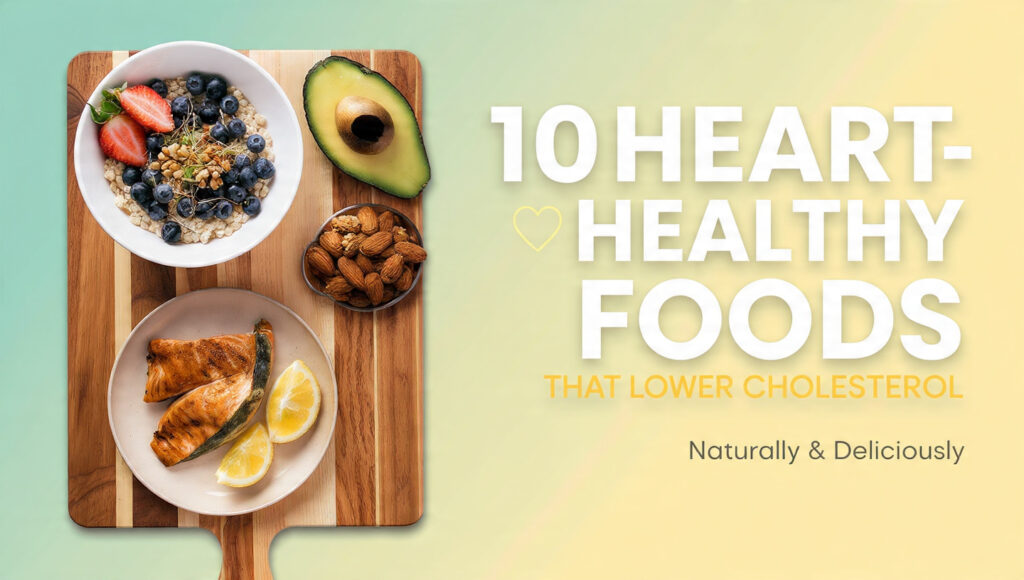
10 Heart-Healthy Foods That Lower Cholesterol Naturally
You are not alone, in case your doctor ever examined your blood test and told you, we need to discuss your cholesterol.
The prevalence of high cholesterol is phenomenal. The good news? You can move those numbers either in the right direction or the wrong direction, in most instances, with simple food choices, without having to completely alter your whole life.
This does not imply that you have to eat rabbit food or renounce all that you love. It involves the preference of more foods which:
- Lower “bad” LDL cholesterol
- Raise the level of good HDL cholesterol.
- Reduce inflammation
- Keep your heart, blood vessels and health in good condition.

In this guide we will go through 10 foods high in heart and they can also reduce cholesterol level without the use of medications, so we are going to learn how to eat them in the real life (not only theoretically).
What Is Cholesterol, Really? A Quick Refresher.
The cholesterol may be commonly assumed to be the villain of all heart-related tales, though, it is essential to your body. Cholesterol is a fat-like substance that is waxy and serves in the following functions:
- Build cell membranes
- Produce such hormones as estrogen and testosterone.
- Produce vitamin D
- Produce bile acids which aid in fats digestion.
The issue begins when the level of cholesterol particularly LDL cholesterol becomes excessive. This additional cholesterol may be deposited in the walls of the arteries and can accumulate into plaque making the arteries narrow and predisposing them to:
- Heart attack
- Stroke
- Peripheral artery disease
On the other side, there is the HDL (good) cholesterol which aids in the transportation of additional cholesterol off the arteries and back to the liver where it can be eliminated.
It is important to diet, genetics, exercise, and lifestyle. You cannot do anything about your genes, but you have a lot of control on what gets on your plate.
Now, then, we will discuss the foods that actually can make your cholesterol and not damage it.
Superstars of Oats and Other Soluble Fiber.
Oats are the one food hero in terms of cholesterol lowering.
The magic ingredient is soluble fiber especially a kind referred to as beta-glucan. The soluble fiber is a sponge in your digestive system: this substance attaches itself to cholesterol in the gut and transfers it out of the body rather than allowing it to be absorbed in the bloodstream.
Solvable fibers are also found in large amounts in:
- Barley
- Peas (black peas, green peas, boiled peas)
- Apples
- Pears
- Carrots
- Ground flaxseed
Convenient methods of increasing intake of oats and soluble fiber.
- Begin your day with a bowl of oatmeal and some fruit berries and a spoonful of ground flax seed.
- Prepare the oats that are to be cooked overnight using rolled oats, yogurt, and sliced apples.
- Beans and lentils may be added to soups, stews, chili, and salads.
- Take an apple and cut it in half and put in peanut butter as a snack.
At least 5-10 grams of soluble fiber per day will yield an observable change in LDL cholesterol with time.
Fatty Fish Rich in Omega-3s
Not every fat is made equal. Fatty acids in fatty fish such as salmon, mackerel, sardines, trout, and herring are also omega-3 that are great friends to your heart.
Omega-3s do not decrease LDL cholesterol directly by much, but they do a number of other important things in the way they help your heart:
- Lower triglycerides
- Lesson inflammation of the blood vessels.
- Assistance in maintaining your heart rate constant.
- May a little bit increase the HDL (good) cholesterol.
The way to increase the amount of omega-3s on your plate.
- Consume fatty fish (at least once in a week). Grill salmon, bake trout or bake sardine toast and lemon and herbs.
- As an alternative to tuna salad with mayo, prepare a salmon salad with cans of salmon, Greek yogurt, and chopped vegetables.
- Known Whole-grain crackers with canned sardines or mackerel and lemon squeezer.
When you are not a fish eater or a vegetarian, then think about:
- Plant-based omega-3 (chia seeds, flaxseeds and walnuts).
- Omega-3 supplements (consult your physician) made out of algae.
Nuts: Heart Protection in a Nutshell.
Almonds, walnuts, pistachios, pecans, hazelnuts, and so on, these are not only tasty but also crunchy snacks. They are loaded with nutrients that are healthy to the heart:
- Unsaturated fats (substitute saturated fats which are unhealthy)
- Fiber
- Plant sterols (that prevent the presence of cholesterol)
- Antioxidants vitamin E, etc.
Regular intake of nuts has been associated with a decreased cholesterol level that is LDL and the decreased risk of heart disease.
How to eat nuts without calories overload.
Nuts contain a lot of calories and hence a small portion serves a long way.
- Eat a little snack (around 1/4 cup) of nuts in place of chips.
- Top Oatmeal, salads or yogurt with chopped nuts or almonds.
- Spread whole-grain toast or apiece slices with nut spreads (such as peanut or almond).
Do not use highly salted, candied or honey-roasted ones. Use raw or dry-roasted nuts devoid of much added oil or sugar.
Extra Virgin Olive Oil (and Other Healthy Fats).
One of the easiest changes you can do is to replace your usual cooking oil with a healthier one, such as butter, ghee, or shortening, among others.
The extra virgin olive oil (EVOO) is among the heart-healthy Mediterranean diet stars. It’s rich in:
- Monounsaturated fats, which are able to reduce LDL cholesterol.
- Antioxidants, such as polyphenols that prevent the damage of blood vessels.
Smart ways to use olive oil
- Pour on the salads, roasted vegetables or grilled fish.
- It is to be used as your main cooking oil with low to medium heat.
- Prepare simple homemade salad dressing using olive oil, lemon juice and herbs rather than the packaged salad dressing that contains a lot of sugar and additives.
Other healthy fats include:
- Avocado and avocado oil
- Nuts and nut butters
- Seeds (chia, flax, sunflower, and hemp)
It is not about drowning everything in oil but rather using unsaturated fats more frequently as a substitute of saturated ones (butter, lard, fatty cuts of red meat, etc.).
Beans and Lentils and Other Legumes.
Legumes are considered the Swiss Army knife of the healthy diet: they contain a lot of fiber, plant protein, minerals, and antioxidants and are naturally low in fat and do not contain cholesterol.
Beans and lentils are good in maintaining healthy cholesterol due to their soluble fiber and capability of regulating blood sugar levels.
Sources of legumes that are heart-healthy.
- Black beans
- Kidney beans
- Chickpeas
- Lentils (red, green, brown)
- Navy beans
- Pinto beans
Easy ways to eat more beans
- Instead of adding more rice to bowls of tacos or burritos, add black beans.
- Prepare a huge batch of lentil soup to bring to the office.
- Salads, curries or roasted with spices are some of the ways you can use chickpeas as a snack.
- Combine chickpeas in hummus and eat with uncooked vegetables or whole-grain pita.
A difference in cholesterol and heart health can be achieved by simply replacing one or two meat-based meals a week with bean-based meals.
Fruits that are full of Pectin and Antioxidants.
Fruits are rich in useful vitamins and fiber, although certain ones are especially useful in cholesterol due to pectin, a soluble fiber.
Top picks include:
- Apples
- Pears
- Oranges, grapefruit and tangerines (citrus fruit).
- Fruits (blackberries, raspberries, strawberries, and blueberries)
Pectin binds to LDL cholesterol in the digestive system, thus reducing it. Fruits especially the berries also provide bountiful amounts of antioxidants that fight inflammation and oxidative stress- highly contributing factors to heart disease.
Simple Fruity ways of enriching your day.
- Added to oatmeal, cereal or salads.
- Freeze some berries causing smoothies or yogurt bowls.
- The sweet desserts should be replaced with fresh fruit and a cup of Greek yogurt.
- Add the lemon or orange squeezer to water or salads and fish without salt.
Fruit is full of fiber and nutrient and is rich in natural sugars, remember. Fruits are nearly always better than fruit juices.
Vegetables (Meta-Particularly, Fibrous Colorful ones)
We cannot discuss the heart health and cholesterol without talking about vegetables. They provide:
- Soluble fiber (increased amounts) Fiber.
- Antioxidants
- Potassium and mineral salts.
- Extremely low amount of calories per volume (good to lose weight)
Certainly some of the healthiest veggies especially healthy to the heart:
- Leafeens: spinach, kale, collard greens, Swiss chard
- Cruciferous vegetables: Brussels sprouts, Cabbage, cauliflower broccoli.
- Carrots, sweet peppers, eggplant, tomatoes.
The indirectly beneficial effect of veggies on your cholesterol.
- More veggies = more fiber
- Fiber assists your body to eliminate any surplus cholesterol.
- Veggies replace foods that are unhealthy and more caloric.
Food ideas on how to stock up on vegetables.
- Have 50 percent or more of your meal of vegetables at lunch and dinner.
- This is used in omelettes, sandwiches, wraps, soups, and smoothies.
- Bake a large tray of various vegetables once or twice a week and eat them as a side-dish or as an addition to a bowl or a salad.
You do not need to be fond of all vegetables. Begin with a small number of those you like and build on it.
Avocados: Creamy Heaven With a Cholesterol Bonus.
Avocados are something of a health food cliche- but it is not without reason.
They’re rich in:
- Monounsaturated fats that may help to reduce LDL and increase HDL.
- Fiber
- Potassium
- Antioxidants
In research, individuals that substituted portion of the saturated fats (butter or cheese) in their diets with avocados experienced favorable changes in LDL cholesterol and triglycerides.
Easy avocado ideas
- Avocado and tomato Smash Avocado on whole-grain toast with tomato and sprinkling of seeds.
- Prepare avocadoes into salads, burrito bowl meals or chili.
- Blend in smoothies to be creamy rather than using yogurt or ice cream.
- Prepare basic guacamole consisting of lime, cilantro and a pinch of salt- do not eat only with chips but with raw vegetables.
Avocados are high in calories and therefore monitor the amount of portions you take in case you are also trying to lose weight. A medium avocado has a size of about 1/3 to 1/2 which is a good serving size.
Seeds: Flax, Chia, Hemp and More Tiny But Mighty.
Seeds are also similar to nuts in that they contain much nutritional value in a very small size.
Examples of the best cholesterol and heart healthy foods include:
- Flaxseeds (ground flaxseed in particular)- contain advice, and soluble fiber, and plant omega-3s.
- Chia seeds – are a good source of fiber, some of which is soluble fiber that becomes gel-like when mixed with liquid.
- Hemp seeds – healthy proportions of oils and plant protein.
- Sunflower and pumpkin seeds – are good sources of healthy fats, magnesium and antioxidants.
How seeds help cholesterol
- Give fiber which attaches cholesterol.
- substitute less nutritious in place of crunchy toppings (croutons, bacon bits)
- Add good fats, which maintain the HDL and the general cardiovascular activity.
How to shake seeds into your life.
- Add flax or chia seeds into the oatmeal, yogurt or smoothies.
- Sow the hemp seeds or the sunflower seeds on the salads, soups or roasted vegetables.
- Chia seeds can be used to prepare chia pudding using milk and fruit.
Even a simple 1-2 tablespoons of it a day will provide a significant increase in fiber and healthy fats.
No More Dark Chocolate, (No, But…Yes).
The chocolate lovers have a good news: the dark chocolate (and natural cocoa) has compounds known as flavonoids, which may help:
- Enhance blood vessels functioning.
- Reduce inflammation
- Help to maintain normal blood pressure.
- Minorly ameliorate cholesterol level in few individuals.
It is all in quality and moderation.
Selecting chocolate that is good to the heart.
- Choose dark chocolate of 70 percent or more.
- Look at the label to be sure that the amount of added sugar is minimal, and there are no hydrogenated oils.
- It is better to have a couple (15-30 grams) of a small square or two a few times a week, rather than a whole bar a day.
Unsweetened cocoa powder can also be used in smoothies, oatmeal or even in homemade hot cocoa with a little bit of honey or stevia.
Bonus Category: Foods to Reduce in Favor of a Better Cholesterol.
It is potent to know what to add. However, to have any real impact, it is worth also thinking about what to restrict.
When you are trying to reduce cholesterol (particularly the LDL) reduce:
- Deli meats, hot dogs, sausage, bacon, as well as processed meats.
- Fried foods (fast-food restaurants in particular)
- Baked goods prepared using butter, shortening or excess refined flour and sugar.
- Whole-fat dairy goods and fatty red meat, in case you consume it often.
- Foods containing trans fats (read the label on food packages that contain partially hydrogenated oils).
You don’t need to be perfect. Although you may not be able to switch 20-30 percent of your meals a week to more heart-healthy choices, it will still help in the long run.
Coming It All Together: A Sample Heart-Healthy Day.
To bring this closer to reality, the following is an example of a day of eating that can be used to maintain healthy cholesterol levels using these 10 foods.
Breakfast
- Oatmeal prepared using rolled oats.
- Add ground flaxseeds and stir in it then crunch in a handful of blueberries and a handful of walnuts.
- Cup of green tea or coffee (not too heavy on the cream and sugar)
Mid-Morning Snack
- Slices of peanut or almond butter Appleyuts on top of a spoonful of butter.
Lunch
- Big salad, mixed greens of the leafy type, tomatoes, cucumbers, carrots.
- Salmon or chickpeas are to be grilled as a top.
- Olive oil and lemon dressing
- A half-avocado or a slice of the whole-grain bread on the side.
Afternoon Snack
- Chia seed-infused Greek yogurt and dark chocolate shavings sprinkled over it.
Dinner
- Vegetable or Lentil stew and bean chili.
- Bacon of steamed broccoli and olive oil, as well as garlic.
- Optional: small dish of brown rice or quinoa.
Dessert (if you want it)
- 1 square or 2 squares of dark chocolate.
- Or citrus fruit half an orange or grapefruit.
It is not a strict diet, it is just an illustration of how you can incorporate several foods that are cholesterol-friendly throughout an ordinary day.
The Right Lifestyle Habits That Play With Your Food (Not Oppose it).
Cholesterol is a giant lever with food being one of them.
To increase the impact of the foods that are good to your heart, combine them with:
- Frequent activity – Have at least 150 minutes of moderate activity (brisk walking, cycling, swimming) and two sessions of muscle strength training in a week.
- Weight – A small loss of a weight of 5-10% of your body mass can make the cholesterol levels better.
- Not smoking – Smoking reduces the HDL good cholesterol and destroys blood vessel. One of the best things that you can do to your heart is to quit.
- Dealing with stress – Chronic stress leads to pushing your body to greater levels of inflammation and bad habits (eating too much, smoking, etc.). Breathing deeply, taking walks, hobbies and sleep are all helpful.
- Frequent examinations – Monitor your cholesterol level, blood pressure and blood sugar levels with your physician.
It is important to remember that the process of cholesterol enhancement is often a long-term one. Count not days, months and years. However, every meal and every decision is a part of the larger trend.
Concluding Remarks: Little Things, Big Difference.
Reducing cholesterol does not require being afraid of food and having a perfect diet.
Start where you are and ask:
- Is it possible to replace one meal this week with a bean based meal?
- Is it possible to substitute butter with olive oil in a recipe?
- Is it possible to have oats or berries on breakfast instead of a sweet cereal?
- Do I have the option of having salmon once or twice a week as opposed to processed meat?
Such small realistic changes cumulate over time.
In summary, the 10 heart-healthy foods that may be used to reduce the cholesterol level naturally are:
- Foods with soluble fiber Oats and other soluble-fiber foods
- Fatty fish rich in omega-3s
- Nuts
- Healthy fats (Extra virgin olive oil).
- Beans, lentils, and legumes
- Antioxidants Fruits that contain pectin.
- Vegetables (in particular, colorful and fibrous ones)
- Avocados
- Seeds (flax, chia, hemp, etc.)
- Dark handed chocolate (sparingly).
You have to look at them as part of your daily partners in heart health rather than as products that are supposed to help you lose weight.
You do not need to make everything a complete overhaul. Choose two or three concepts on this list, and make them a part of your daily life and have your kitchen become your secret weapon to heart health.