
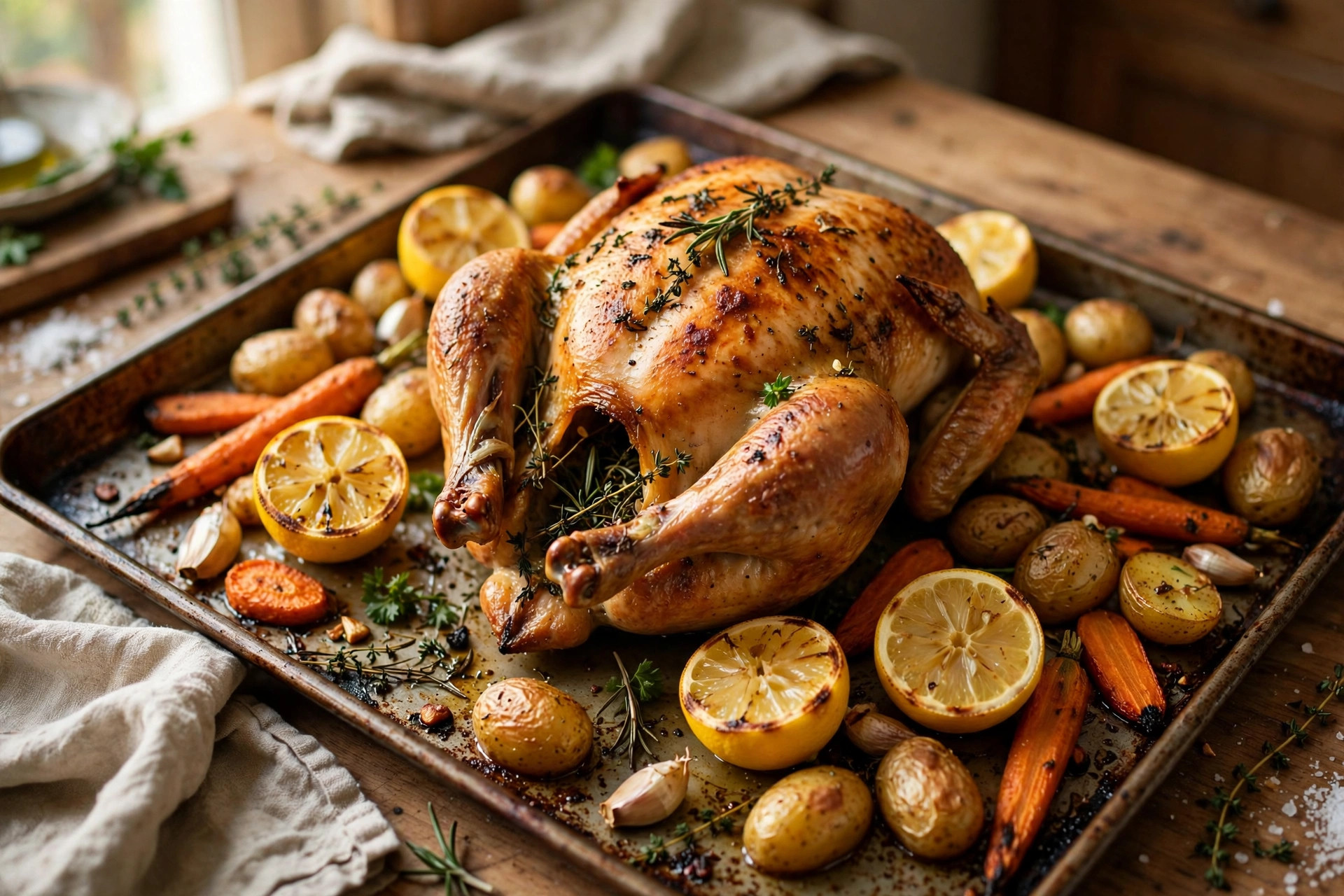
There are evenings when a good family dinner needs to be simple, filling and easy to clear away afterwards. This one-pan lemon herb chicken with roasted vegetables does all three. Everything cooks on a single large baking tray, the chicken stays juicy under a lemon and herb coating, and the vegetables roast in the same pan, soaking up the juices as they cook. It is the kind of meal that suits a busy weekday, a relaxed Sunday lunch, or a table full of guests who all want second helpings.
The recipe serves four generously, and it scales easily. For six people, use a second tray rather than crowding one, because vegetables that are packed too tightly will steam instead of roast. The total time is about one hour, but most of that is hands-off oven time, so you can set the table, make a salad, or simply sit down for ten minutes while dinner takes care of itself.
At a glance
Serves: 4 people. Preparation time: 20 minutes. Marinating time: 20 minutes, or up to 4 hours if you have time. Cooking time: 40 to 45 minutes. Resting time: 5 minutes. Equipment needed: one large rimmed baking tray, a small bowl, a sharp knife, a chopping board, kitchen tongs, and a meat thermometer if you have one.
Ingredients
For the chicken and marinade, you will need 8 bone-in, skin-on chicken thighs, about 1.2 kilograms in total, 3 tablespoons of olive oil, the finely grated zest and juice of 2 unwaxed lemons, 4 garlic cloves, crushed, 1 tablespoon of fresh thyme leaves, 1 tablespoon of chopped fresh rosemary, 1 teaspoon of dried oregano, 1 teaspoon of sea salt, and half a teaspoon of black pepper. If you prefer boneless thighs, use 800 grams and reduce the cooking time by about 10 minutes, checking that the meat is cooked through before serving.
For the vegetables, you will need 800 grams of baby potatoes, halved, 3 carrots, peeled and cut into thick batons, 2 red onions, cut into wedges, 1 red pepper and 1 yellow pepper, deseeded and cut into wide strips, 1 courgette, cut into half-moons about 1 centimetre thick, 200 grams of cherry tomatoes on the vine, and 2 tablespoons of olive oil. You will also need a small handful of fresh flat-leaf parsley, chopped, and lemon wedges to serve.
Preparing the chicken
Start by patting the chicken thighs dry with kitchen paper. Dry skin browns far better than damp skin, and this one step makes a real difference to the finished dish. Place the thighs in a large bowl or a shallow dish. Add the olive oil, lemon zest and juice, crushed garlic, thyme, rosemary, oregano, salt and pepper, and rub the mixture all over the chicken, working it under the skin where you can. Cover the bowl and leave it at room temperature for 20 minutes, or in the fridge for up to 4 hours. If you marinate it in the fridge, take it out 30 minutes before cooking so it is not fridge-cold when it goes into the oven.
Preparing the vegetables
While the chicken marinates, heat the oven to 200 degrees Celsius, or 180 degrees for a fan oven, which is gas mark 6. Put the potatoes, carrots and red onions on the baking tray first, because they take the longest to cook. Drizzle them with 1 tablespoon of olive oil, season with a pinch of salt and pepper, and toss them with your hands until they are lightly coated. Spread them in a single layer, leaving a little space between the pieces. Crowding is the most common reason roast vegetables turn soft, so give them room.
After 10 minutes in the oven, take the tray out and add the peppers, courgette and cherry tomatoes, drizzled with the remaining tablespoon of olive oil. This staggered start stops the softer vegetables from turning to mush while the potatoes are still firm. It is a small detail, but it is what gives you crisp-edged peppers and potatoes that are golden on the outside and fluffy inside.
Cooking the chicken
Place the marinated chicken thighs on top of the vegetables, skin side up, and pour any leftover marinade from the bowl over the top. Return the tray to the oven and roast for 35 to 40 minutes. The chicken is ready when the skin is deep golden and crisp, the juices run clear when the thickest part is pierced with a knife, and a meat thermometer inserted into the thickest thigh, away from the bone, reads 74 degrees Celsius. If you do not have a thermometer, cut into the thickest piece: the meat should be opaque all the way through, with no pink remaining near the bone.
Halfway through cooking, baste the chicken once with the pan juices and turn the vegetables over with tongs so they brown evenly. If the skin is browning too quickly, cover the tray loosely with foil for the last 10 minutes. If the skin is not crisp enough at the end, put the tray under a hot grill for 2 to 3 minutes, watching it closely so it does not catch.
Resting and serving
Take the tray out of the oven and leave the chicken to rest for 5 minutes before serving. Resting lets the juices settle back into the meat, so the chicken stays moist when you cut into it. While it rests, scatter the chopped parsley over the tray and squeeze over a little extra lemon juice if you like a brighter flavour. Serve the chicken straight from the tray at the table, with the roasted vegetables alongside, so everyone can help themselves. A simple green salad, a bowl of steamed green beans, or warm crusty bread for mopping up the pan juices all work well with it.
Variations to try
Once you know the basic method, this recipe is easy to adapt. Swap the potatoes for sweet potatoes, cut into similar-sized chunks, and add them at the same stage. Replace the peppers with aubergine, cut into cubes, and add it with the second batch of vegetables. For a warmer flavour, add 1 teaspoon of smoked paprika and half a teaspoon of ground cumin to the marinade. For a Mediterranean version, add a handful of pitted Kalamata olives and a crumbled block of feta over the vegetables for the last 10 minutes of cooking. For children who prefer milder flavours, leave out the black pepper and use only lemon, olive oil and a little thyme in the marinade; the chicken will still be full of flavour.
Shopping and storage notes
Buy chicken thighs with the skin on for the best result, and ask the butcher to trim any excess fat if you prefer. Baby potatoes with thin skins do not need peeling, which saves time. Store any leftovers in a covered container in the fridge and eat them within 2 days. Leftover chicken is excellent cold in sandwiches, or shredded into a salad the next day. The roasted vegetables can be reheated in a hot oven for 10 minutes, which keeps them crisper than reheating in a microwave. This dish does not freeze particularly well once cooked, because the vegetables lose their texture, so it is best enjoyed fresh or as next-day leftovers.
Common questions
Can I use chicken breasts instead of thighs? Yes, but breasts dry out more easily, so use bone-in breasts, reduce the cooking time to about 30 minutes, and check them early. Can I prepare it ahead? Yes: marinate the chicken the night before and keep it covered in the fridge, and chop the vegetables in the morning, storing them in a covered container. Can I cook it in two smaller trays? Yes, and that is the best option for a larger group; just swap the trays halfway through cooking so they brown evenly. What if my potatoes are still hard? Cut them smaller next time, and give them the full 10-minute head start before the other vegetables go in.
This one-pan dinner is proof that a family meal does not need a long list of pots, a complicated sauce, or hours in the kitchen. With good ingredients, a hot oven and a little patience, you get crisp chicken, sweet roasted vegetables and a tray of pan juices that taste like they took far more effort than they did. Put it on the table, let everyone serve themselves, and enjoy the rare pleasure of a dinner that is both easy to cook and easy to clear away.
Please note: this article is general food information only and is not medical advice. Adjust quantities and ingredients to suit your own tastes, dietary needs and household, and follow normal food safety guidance when cooking poultry.