
How to Cook Dried Beans from Scratch: Soaking, Simmering and Seasoning Without Guesswork

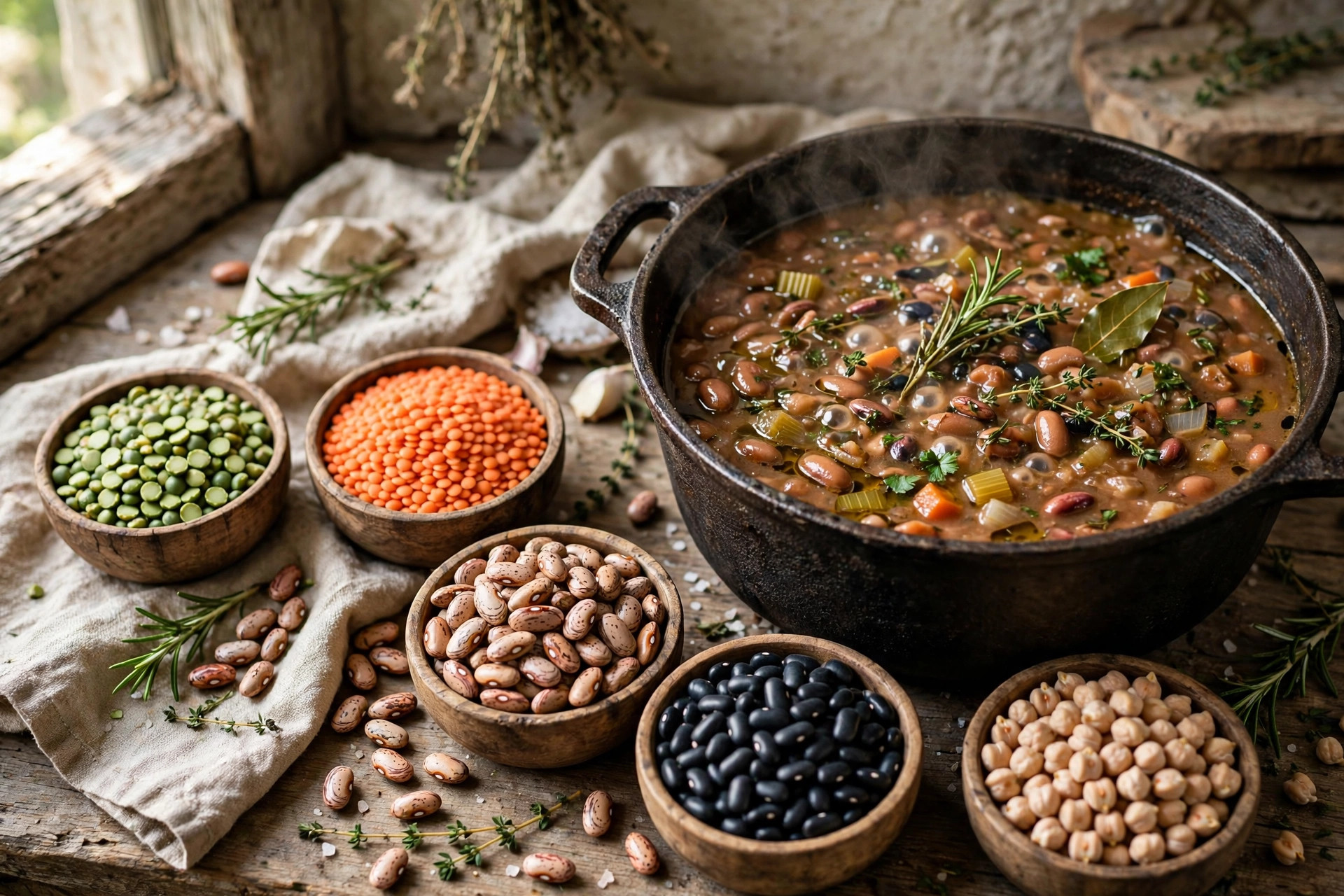
Dried beans are cheap, filling and remarkably versatile, but many cooks avoid them because they are unsure about soaking, cooking times and when to add salt. This guide removes the guesswork. It explains how to sort and rinse beans, when soaking helps and when you can skip it, how long the most common types take to cook, and how to turn a plain pot of beans into a meal worth repeating. Once you have cooked one batch successfully, you will wonder why you ever thought it was complicated.
Why cook beans from dried?
There are three practical reasons. First, dried beans cost far less per serving than tinned beans, especially when you buy them in 500 gram or 1 kilogram bags. Second, you control the texture: you can cook them until they are firm enough for salads, or soft enough to mash into a dip. Third, a pot of home-cooked beans gives you both beans and a flavourful cooking liquid, which is excellent for soups and stews. A 500 gram bag of dried beans will give you roughly 1.2 to 1.4 kilograms of cooked beans, which is about 6 generous servings, or enough for two or three meals for a family of four.
Sorting, rinsing and soaking
Start by tipping the beans onto a tray or a large plate and picking out any small stones, broken beans or discoloured pieces. This takes two minutes and is worth doing, because a stone in a finished dish is an unwelcome surprise. Rinse the beans in a colander under cold running water, then put them in a large bowl. For soaking, cover them with cold water by at least 8 centimetres, because they will swell considerably, and leave them for 8 to 12 hours, or overnight, at room temperature. Drain and rinse them before cooking.
Soaking is not strictly essential, but it has clear benefits: it shortens the cooking time by roughly a third, it helps the beans cook more evenly, and many cooks find soaked beans easier to digest. If you forget to soak, use the quick-soak method instead: put the beans in a pot, cover with water, bring to a rolling boil for 2 minutes, take the pot off the heat, cover it, and leave it for 1 hour. Drain, rinse, and cook as usual. Lentils and split peas do not need soaking at all, and red lentils in particular cook in 15 to 20 minutes.
Cooking step by step
Put the soaked, drained beans in a large, heavy pot and cover them with fresh cold water by about 5 centimetres. Bring the pot to a gentle boil over a medium-high heat, then skim off any foam that rises to the surface. This foam is harmless, but removing it gives a cleaner-tasting result. Reduce the heat to low, put the lid on slightly ajar, and simmer gently. A vigorous boil can break the skins and turn the beans to mush, so keep the heat low and steady, and check the water level every 30 minutes, topping up with boiling water from a kettle if the beans start to peek above the surface.
Do not add salt or acidic ingredients, such as tomatoes, vinegar or lemon juice, at the start, because they can toughen the skins and lengthen the cooking time. Instead, add aromatics at the beginning for flavour: 1 halved onion, 2 whole garlic cloves, 1 bay leaf, and a sprig of thyme or a strip of lemon peel. These can be fished out at the end. Add salt in the last 20 minutes of cooking, about 1 teaspoon per 500 grams of dried beans, and taste before serving.
Cooking times at a glance
These times are for soaked beans simmered gently, and they will vary with the age of the beans, because older beans take longer. Black beans take 45 to 60 minutes. Kidney beans take 60 to 75 minutes, and must be boiled vigorously for at least 10 minutes at the start to be safe to eat, so do not cook kidney beans in a slow cooker from raw. Chickpeas take 60 to 90 minutes. Cannellini beans and butter beans take 45 to 60 minutes. Pinto beans take 60 to 75 minutes. Borlotti beans take 45 to 60 minutes. Adzuki beans take 35 to 45 minutes. Green or brown lentils take 20 to 30 minutes without soaking, and red lentils take 15 to 20 minutes. Start testing 10 minutes before the earliest time given: a bean is ready when it squashes easily between your fingers or against the side of the pot, with no chalky centre.
Seasoning and flavour
Plain beans are a blank canvas, and a few additions transform them. For a Mediterranean pot, add olive oil, garlic, rosemary and a squeeze of lemon at the end, and serve with crusty bread. For a Mexican-style pot, add 1 teaspoon of ground cumin, 1 teaspoon of smoked paprika, half a teaspoon of chilli powder and a chopped onion during the last 30 minutes, and serve in warm tortillas with salsa and grated cheese. For a simple bean stew, add 400 grams of chopped tomatoes, 2 chopped carrots, 1 chopped celery stick and 1 litre of stock in the last 40 minutes, and simmer until the vegetables are soft. For a bean salad, toss warm cooked beans with 3 tablespoons of olive oil, 2 tablespoons of red wine vinegar, 1 finely chopped red onion, a handful of chopped parsley and salt and pepper, and leave for 20 minutes so the flavours mingle.
Three easy meals from one pot
Cook a large batch at the weekend and use it across the week. On day one, serve the beans simply, with rice and a green salad. On day two, mash half the beans with a fork, add a little of the cooking liquid, garlic and olive oil, and spread the result on toast with a drizzle of chilli oil for a quick lunch. On day three, stir the remaining beans into a tomato sauce with pasta, or blend them with tahini, lemon juice and garlic for a smooth dip to serve with pitta bread and raw vegetables. Because the beans are already cooked, each of these meals takes under 20 minutes.
Storing cooked beans
Cool the beans in their cooking liquid, which keeps them moist, then store them in a covered container in the fridge for up to 4 days. For longer storage, freeze them in portions of about 400 grams, with a little of the cooking liquid, in freezer bags or containers; they will keep for up to 3 months. Defrost overnight in the fridge, or reheat gently from frozen in a covered pan with a splash of water. Do not leave cooked beans at room temperature for more than 2 hours, and reheat them until they are piping hot throughout.
Troubleshooting
If your beans are still hard after the expected time, the most likely cause is that they are old, or that the water was too hard, or that salt or tomatoes were added too early. Keep simmering and test every 15 minutes; most beans will eventually soften. If the beans are splitting and turning to mush, the heat was too high, or they were stirred too vigorously; next time, simmer more gently and stir only occasionally. If the beans taste bland, they probably need more salt, or a splash of vinegar or lemon juice at the end, which brightens the flavour without making the dish sour. If you cooked too many, freeze the extra portions rather than leaving them in the fridge for a week.
Cooking dried beans is a skill that pays for itself quickly. A bag of beans, a pot of water, a few aromatics and a little patience will give you meals for days, at a fraction of the cost of ready-made alternatives, and with a texture and flavour you can control completely. Start with chickpeas or black beans, follow the steps above, and keep notes on the timing for your own cooker and your own beans; after two or three batches, you will not need the guide at all.
Please note: this article is general food information only and is not medical advice. Follow normal food safety guidance, and always boil kidney beans vigorously for at least 10 minutes before simmering, as described above.