
Honey Garlic Salmon with Rice and Greens

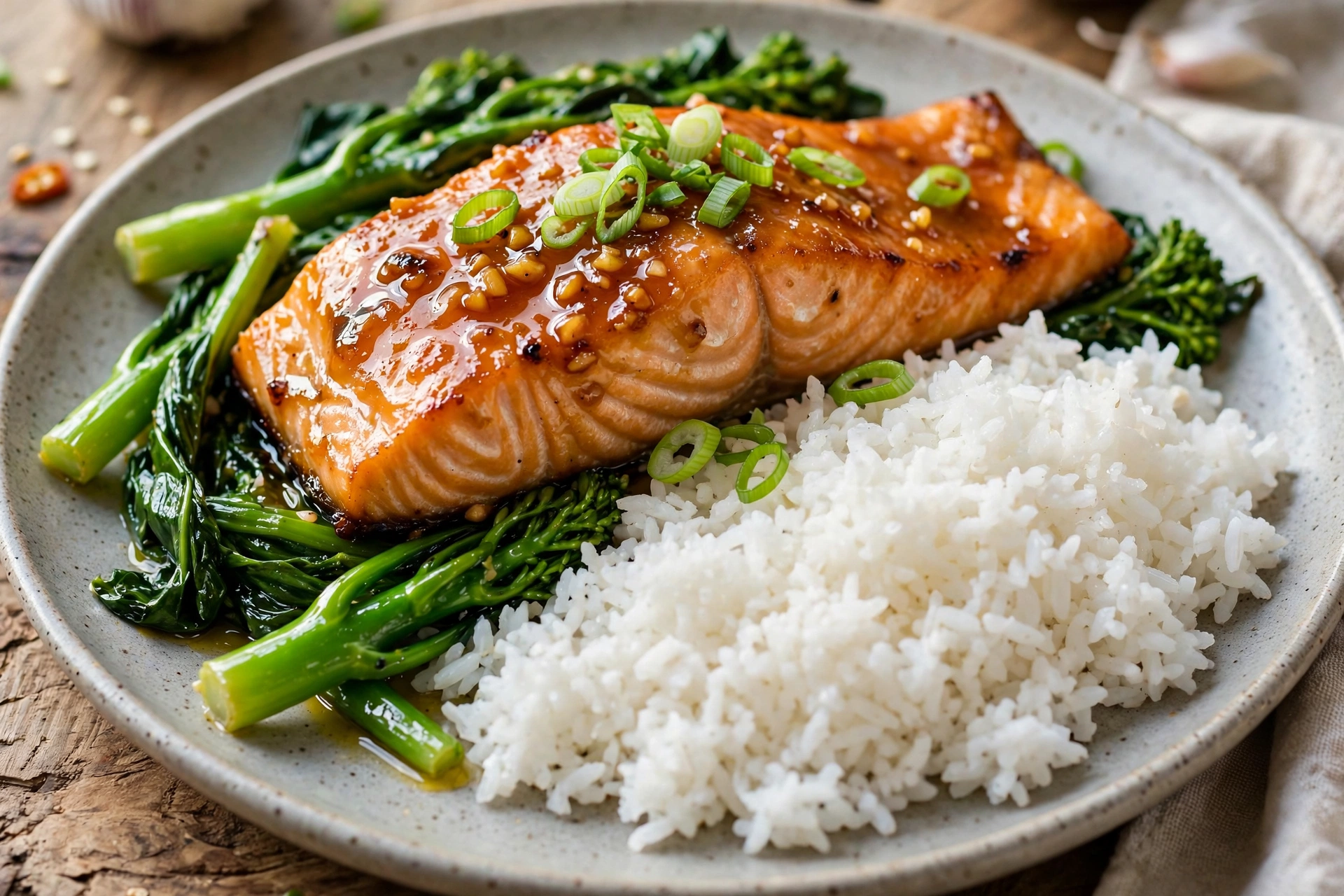
If there’s a dinner I make when I want something that looks impressive but is secretly easy, this is it. Honey garlic salmon has saved me more times than I can count — the kind of evening when people are coming over in forty minutes and I haven’t planned anything, or the kind of Tuesday when I want dinner to feel like a small occasion rather than a chore. It takes about twenty minutes, it uses one pan for the fish, and it makes the kitchen smell like a restaurant in the best way.
The first time I made it, I made the classic mistake: I drowned the salmon in sauce. I thought more sauce meant more flavour, so I poured in what felt like a generous amount and watched the whole thing turn into a sticky puddle, with the fish steaming instead of searing. It tasted fine, but it looked like something that had given up. The version below uses less sauce than you’d think, and it’s better for it. The glaze should coat the fish, not swim around it.
Getting the salmon right
Start with the fish itself. I buy fillets with the skin on when I can, because the skin goes wonderfully crisp in a hot pan and it holds the fillet together while it cooks. If yours are skinless, that’s fine too — just be a bit gentler when you turn them. Pat the fillets dry with kitchen paper before they go anywhere near the pan. Wet fish steams; dry fish sears. It’s a small step and it makes a real difference, the kind of thing I wish someone had told me years earlier instead of letting me wonder why my fish never coloured properly.
Season with salt and pepper, and get the pan properly hot with a little oil before the fish goes in, skin-side down if it has skin. Don’t touch it for three or four minutes. I know it’s tempting to poke and check, but leave it alone — the skin needs uninterrupted contact with the pan to crisp up, and the fish will tell you when it’s ready to move because it releases on its own. When the skin is golden and crisp, flip the fillet and cook the other side for just a couple of minutes. Salmon is one of those fish that goes from perfect to dry in a very short window, so I take it off the heat while the centre is still slightly translucent. It keeps cooking for a minute off the heat, and that resting time is what keeps it moist.
A glaze, not a flood
While the fish rests — or in the last minute of cooking, if you’re feeling confident — make the glaze in the same pan. This is where the flavour lives, and it’s barely a recipe: honey, garlic, a splash of soy sauce, and a squeeze of lemon. The garlic goes in first, just until it smells fragrant, maybe thirty seconds; garlic burns fast, and burnt garlic turns the whole sauce bitter, so keep the heat moderate and don’t wander off. Then the honey and soy sauce go in, and you let them bubble together for a minute until they thicken slightly and turn glossy. A squeeze of lemon at the end brightens everything — without it, the glaze can taste a bit one-note, all sweetness and no edge.
Spoon the glaze over the salmon rather than pouring the pan over it. I like to put the fish back into the pan for the final minute, spooning the sauce over the top, so it clings to the fillet and caramelises just slightly at the edges. If your glaze gets too thick, a splash of water loosens it. If it’s too thin, let it bubble for another minute. Cooking is mostly this kind of small adjustment, and nobody watching would know you adjusted anything at all.
Rice that isn’t an afterthought
I’ll admit that for years I treated rice as filler — something to put under the main event while I thought about other things. This dish changed that, because plain rice with a glazed fish and greens is actually a perfect combination, as long as the rice itself is good. I cook mine by the absorption method: rinse it until the water runs mostly clear, then one part rice to one and a half parts water, a pinch of salt, bring it to a boil, lid on, lowest heat for about twelve minutes, then leave it alone for ten minutes more without lifting the lid. The standing time is the part I used to skip, and it’s the part that turns rice from slightly wet to properly fluffy.
If you want to make it a little more interesting, stir a knob of butter through at the end, or a handful of chopped spring onions, or the zest of that lemon you already used for the glaze. Nothing dramatic. Just enough that the rice tastes like it belongs on the plate rather than being there by default.
The greens
For the greens, I use whatever looks good — tenderstem broccoli, green beans, or spinach, depending on what’s in the fridge. The method is the same either way: a hot pan, a little oil, a clove of garlic, and the greens tossed until they’re bright and just tender. For broccoli or beans, a splash of water and a lid for a couple of minutes helps them cook through without going soft. For spinach, it wilts in about a minute, so watch it — spinach goes from perfect to a sad puddle almost instantly, and there’s no coming back from that.
A little sesame seed scattered over the top at the end makes the whole plate look finished, and a few extra spring onions never hurt. Serve the salmon on the rice or beside it, greens on the side, glaze spooned over the top. It’s the kind of plate that looks like you tried much harder than you did, and I see no reason to correct anyone who thinks so.
Why this one stays in rotation
Some recipes are projects. This isn’t one. It’s a weeknight dinner that happens to be good enough for guests, and those are the recipes that actually get cooked more than once. The whole thing, rice included, takes about half an hour if you start the rice first and do everything else while it steams. The shopping list is short. The washing up is one pan, one pot, and a rice pot if you’re being honest about it.
And if you do overcook the salmon slightly, or the glaze goes a touch dark, it still tastes good. That’s the real test of a recipe worth keeping — not whether it works when everything goes right, but whether it forgives you when something doesn’t. This one does.
You will need: 4 salmon fillets, salt and pepper, 1 tablespoon oil, 3 garlic cloves, 3 tablespoons honey, 2 tablespoons soy sauce, half a lemon, 300 g rice, greens of your choice, spring onions and sesame seeds to finish.
Method in brief: Cook rice by absorption and let it stand. Sear salmon skin-side down in a hot pan, flip briefly, rest. In the same pan, soften garlic, add honey and soy, bubble until glossy, finish with lemon, spoon over salmon. Serve with rice and quickly sautéed greens.
Note: This article shares everyday cooking information only. It is general information, not medical or dietary advice.