
Spinach and Ricotta Stuffed Pasta Shells

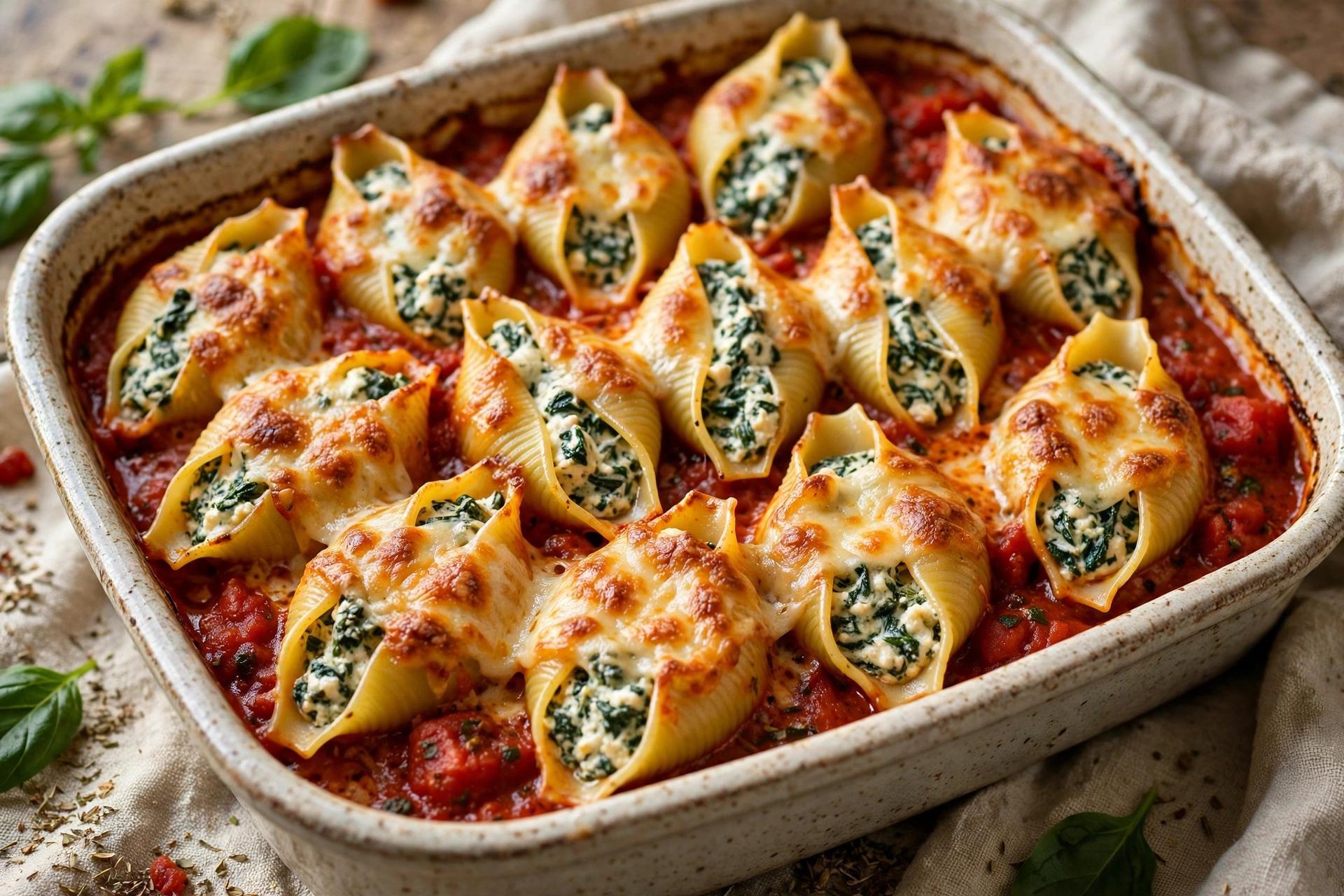
Stuffed pasta shells are a Sunday kind of meal. Not because they’re difficult — they’re really not — but because they ask you to slow down a little. There’s a tray, there’s a bowl of filling, there’s a pile of shells waiting to be filled one by one, and for about twenty minutes the kitchen is quiet and your hands are busy. I find that part oddly relaxing, which is not something I say about many recipes. Most cooking, for me, is a race against the clock. This one feels more like a pause.
I first made these for a friend who doesn’t eat meat, back when my idea of a meat-free dinner was pasta with a jar of sauce and a hopeful expression. I wanted to make something that felt like a proper main course, not a side dish pretending to be dinner. The shells came out of the oven bubbling and golden, and my friend went quiet for a moment and then asked if I’d made them from scratch. I had, and I was absurdly proud of that small moment. They’ve been in my rotation ever since.
The shells themselves
You need large pasta shells — conchiglioni, if the packet uses the Italian name. The small ones are for soup and won’t hold a filling. Cook them in a big pot of well-salted water, but pull them out a couple of minutes before the packet says they’re done. They’ll finish cooking in the oven, and if you cook them fully now, they’ll fall apart when you try to stuff them. Underdone shells are also easier to handle; they hold their shape while you fill them, which matters when you’re on shell number fifteen and your patience is wearing thin.
Drain them and lay them out on a tray or a board, open side up, so they don’t stick together in a clump. If they do stick — and a few always will — a drizzle of olive oil over the top and a gentle pull sorts it out. Don’t rinse them. Rinsing washes off the starch that helps the sauce cling, and nobody wants sauce sliding off their pasta.
A filling worth the effort
The filling is where this dish is won or lost. Ricotta on its own can be a bit bland and, if you’re not careful, a bit watery. So I mix it with things that give it character: spinach, squeezed properly dry, a good handful of grated parmesan, an egg to bind it, a pinch of nutmeg, and plenty of salt and pepper. The nutmeg is the quiet hero here. You barely taste it on its own, but without it the filling tastes flat. A tiny grating — less than you’d think — is enough.
The spinach needs real attention. Whether you use fresh or frozen, the rule is the same: get the water out. Fresh spinach wilts down to almost nothing in a hot pan, and then you have to squeeze it in a clean tea towel or press it in a sieve until it stops dripping. Frozen spinach needs the same treatment after thawing. If you skip this, the filling turns watery in the oven and the shells go soggy, and you’ll wonder what went wrong when the answer was sitting in the sieve all along. I speak from experience. My first batch leaked everywhere, and I served it with a confidence I did not feel.
Once the spinach is dry, chop it roughly and fold it through the ricotta with the parmesan, nutmeg and seasoning. Taste it at this point, before any egg is added. Really taste it: a spoonful, adjusted with salt until it tastes good on its own. The filling is the flavour of the whole dish, so if it is bland in the bowl, it will be bland in the shell. Only then add the egg and mix it in. Do not taste the filling once raw egg has been added; if you want to check the flavour after the egg is in, cook a small spoonful separately first. A little lemon zest is a nice addition if you like a fresher edge, though I leave it out when I am making the classic version.
Sauce, assembly, and the bake
For the sauce, I keep it simple: a tin of chopped tomatoes simmered with garlic, olive oil and a pinch of salt, maybe a few basil leaves if I have them. It doesn’t need to be a project of its own. Spread a layer over the bottom of a baking dish — this stops the shells sticking and gives them something to sit in — then fill each shell with a generous spoonful of the ricotta mixture and nestle them in, open side up, in neat rows. Pour the rest of the sauce over the top, or spoon it between the shells, and finish with a good scattering of mozzarella and parmesan.
Cover the dish loosely with foil and bake at 190°C for about twenty minutes, then take the foil off and bake for another ten to fifteen minutes until the top is golden and bubbling. The foil stage matters: it lets the shells finish cooking and the filling heat through without the cheese burning. The uncovered stage gives you that golden top everyone fights over. Let it stand for five minutes before serving. I know, waiting is hard when it smells that good, but the filling firms up slightly as it cools, and the shells hold together much better on the plate.
The make-ahead trick
Here’s the part that makes this dish genuinely useful rather than just nice: it keeps brilliantly. You can assemble the whole tray in the morning, cover it, and put it in the fridge until evening, adding ten minutes to the baking time. It also freezes well before baking — a tray of stuffed shells in the freezer is a gift to your future self on a day when cooking feels like too much. I’ve also reheated leftovers the next day in a hot oven, covered with foil, and they were nearly as good as the first time, which is more than I can say for most pasta dishes.
Serve it with a simple green salad and some bread for mopping up the sauce, and you’ve got a dinner that looks like you spent all day on it. You didn’t. You spent an hour, most of it pleasantly, and the oven did the rest.
You will need: 250 g large pasta shells, 500 g ricotta, 300 g spinach (fresh or frozen), 100 g parmesan, 1 egg, a pinch of nutmeg, 1 tin chopped tomatoes, 2 garlic cloves, olive oil, mozzarella for topping, salt and pepper.
Method in brief: Boil shells 2 minutes short of the packet time; drain and lay out. Wilt (or thaw) spinach and squeeze very dry; mix with ricotta, parmesan, egg, nutmeg and seasoning. Simmer tomatoes with garlic and oil. Spread sauce in a baking dish, fill shells, arrange open side up, top with remaining sauce and cheese. Bake covered at 190°C for 20 minutes, uncovered for 10–15 minutes more, until golden and bubbling. Rest 5 minutes before serving.
Note: This article shares everyday cooking information only. It is general information, not medical or dietary advice.