
Crispy Roast Potatoes with Rosemary and Garlic

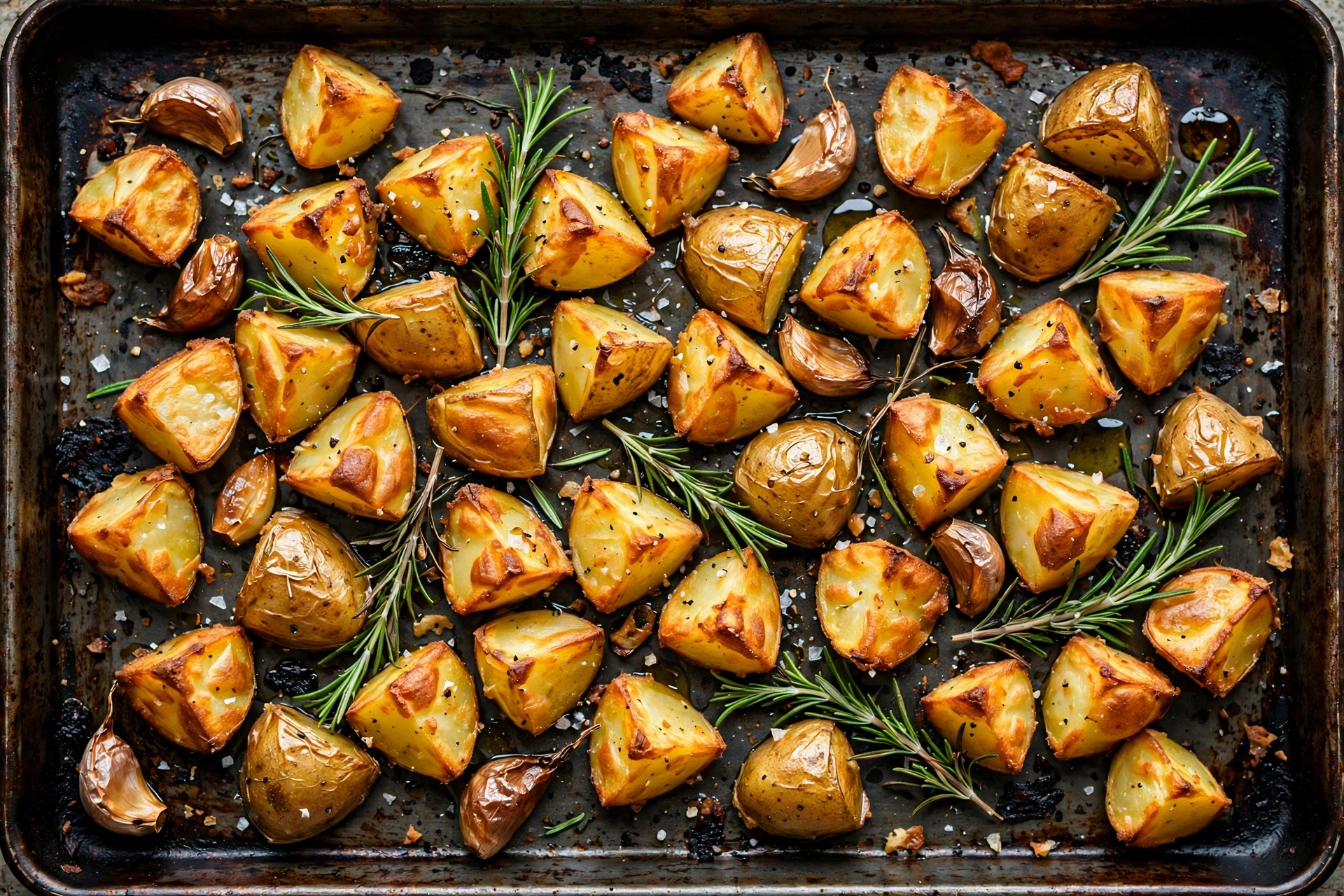
For years, my roast potatoes were a disappointment I refused to admit. They came out of the oven looking promising enough — golden on top, smelling of rosemary — and then you’d bite in and find the middle still a bit firm, or the outside soft instead of crisp. Nobody complained, exactly. People ate them. But I knew they weren’t right, and every time I served them I found myself apologising for them in advance, which is never a good sign for a cook.
The turning point was embarrassingly simple. I was at a friend’s house for Sunday lunch and watched her take the potatoes out of the oven twice. First she boiled them, drained them, shook them up in the pot, and roasted them. Then, halfway through, she took the tray out, turned every single potato, and put it back in. It took her all of three minutes. And those potatoes — I still think about those potatoes. Shattering on the outside, fluffy as a cloud inside, with garlic that had gone sweet and soft in the oil.
Which potatoes, and why it matters more than you’d think
This is the part people like to argue about, so let me just say what works in my kitchen. You want a floury potato — the kind that falls apart when you boil it a touch too long. In the shops here that usually means Maris Piper or King Edward, but honestly, whatever your local floury variety is will do the job. Waxy potatoes, the firm salad kind, will roast up fine and golden, but they won’t give you that fluffy centre or the rough edges that go crisp. They stay too smooth, too polite.
Size matters too. I cut mine into chunks roughly the size of a golf ball, maybe a little bigger. Too small and they dry out before they crisp. Too big and the middle never quite catches up with the outside. If a potato is small, I halve it. If it’s large, quarters. Roughly even pieces, so they cook at the same pace — this is one of those boring details that actually makes all the difference.
The parboil is not optional
I used to skip this step when I was in a hurry. Don’t. Parboiling is what builds the crust. Here’s what I do: peel the potatoes, cut them, and drop them into a big pot of cold, well-salted water. Bring it to a boil and cook them for about seven or eight minutes, until the outside is just starting to soften and a knife meets a little resistance in the middle. You want them cooked on the outside and still firm at the centre — if they fall apart in the pot, you’ve gone too far, though even then all is not lost, because those ragged bits crisp up beautifully.
Then drain them, and this is the important bit: leave them in the colander for a couple of minutes so the steam escapes, then put the lid back on the pot, tip them back in, and shake. Not gently. Really shake. You want the edges to go rough and floury, almost mashed on the surface. Those fluffy, roughed-up edges are what turn into crunch in the oven. The first time I did this properly I actually laughed — the potatoes looked like a mess. They came out perfect.
Rosemary, garlic, and the question of oil
While the potatoes are parboiling, I heat the oven to 200°C (about 400°F) and put a roasting tray in with a generous amount of oil — I use sunflower or vegetable oil for this, because it handles the heat well, with a good glug of olive oil for flavour. The tray needs to be properly hot before the potatoes go in. You should hear a sizzle when they hit the oil. If you don’t hear it, the tray wasn’t hot enough, and the potatoes will soak up oil instead of crisping in it.
Rosemary goes in with the potatoes, not at the start. Fresh sprigs, tossed through so they get coated in oil — they crisp up and go fragrant without burning. Dried rosemary works in a pinch, but it doesn’t have the same effect, and it can taste a bit dusty if it catches. As for garlic: whole cloves, skin on, bashed once with the flat of a knife. They roast in their skins and turn sweet and soft, and you can squeeze them out at the table if you like. I used to chop garlic finely and scatter it over the tray, and every time it burned and turned bitter. Whole cloves fixed that overnight.
Salt and pepper go on before roasting, and I add another pinch of flaky salt at the end, because salt on a crisp surface is one of life’s small pleasures.
The roast itself
Spread the potatoes out in a single layer. This is the other rule I used to break — I’d pile them into a tray that was too small, and they’d steam each other instead of roasting. Give them room. If your tray is crowded, use two trays. It’s worth the washing up.
Roast for about 40 to 50 minutes in total. At the halfway mark, take the tray out and turn each potato. Yes, each one. It’s fiddly, and yes, you will burn your fingers slightly if you’re not careful with the tongs, but it’s the difference between potatoes that are crisp on one side and potatoes that are crisp all over. My friend was right. While you’re there, check the garlic — if a clove looks like it’s colouring too fast, tuck it under a potato.
They’re done when they’re deep golden, not pale gold, and they sound hollow and crisp when you tap one with a fork. If you’re unsure, eat one. Cooks’ privilege. It should shatter slightly at the edges and be soft and fluffy inside, almost like mashed potato held together by a crust.
What I serve them with, and what I learned
These potatoes go with almost anything roasted — a chicken, a joint of meat, a tray of roasted vegetables — but honestly, my favourite way to eat them is the least fancy: with a fried egg and some greens, or just on their own straight from the tray while I’m supposed to be setting the table. There are rarely leftovers, but when there are, I reheat them in a hot oven rather than the microwave, which would undo all that crispness in about thirty seconds.
The biggest lesson from years of mediocre roast potatoes is that the good ones aren’t about a secret ingredient. They’re about three unglamorous things: a floury potato, a proper parboil and shake, and a hot tray with enough room. Get those right and the rosemary and garlic are just the finishing touch — the part that makes the kitchen smell wonderful and makes people ask what you did differently this time.
Ingredients: 1 kg floury potatoes, 4 tablespoons oil (sunflower or vegetable, plus a little olive oil), a few sprigs of fresh rosemary, 6 whole garlic cloves, salt and black pepper.
Method in brief: Peel and cut the potatoes; parboil in salted water for 7–8 minutes; drain, steam-dry and shake to rough up the edges; heat oil in a roasting tray in a 200°C oven; add potatoes, rosemary and bashed garlic cloves; roast 40–50 minutes, turning halfway, until deep golden and crisp.
Note: This article shares everyday cooking information only. It is general information, not medical or dietary advice.