
Foods to Include in a Balanced Everyday Diet

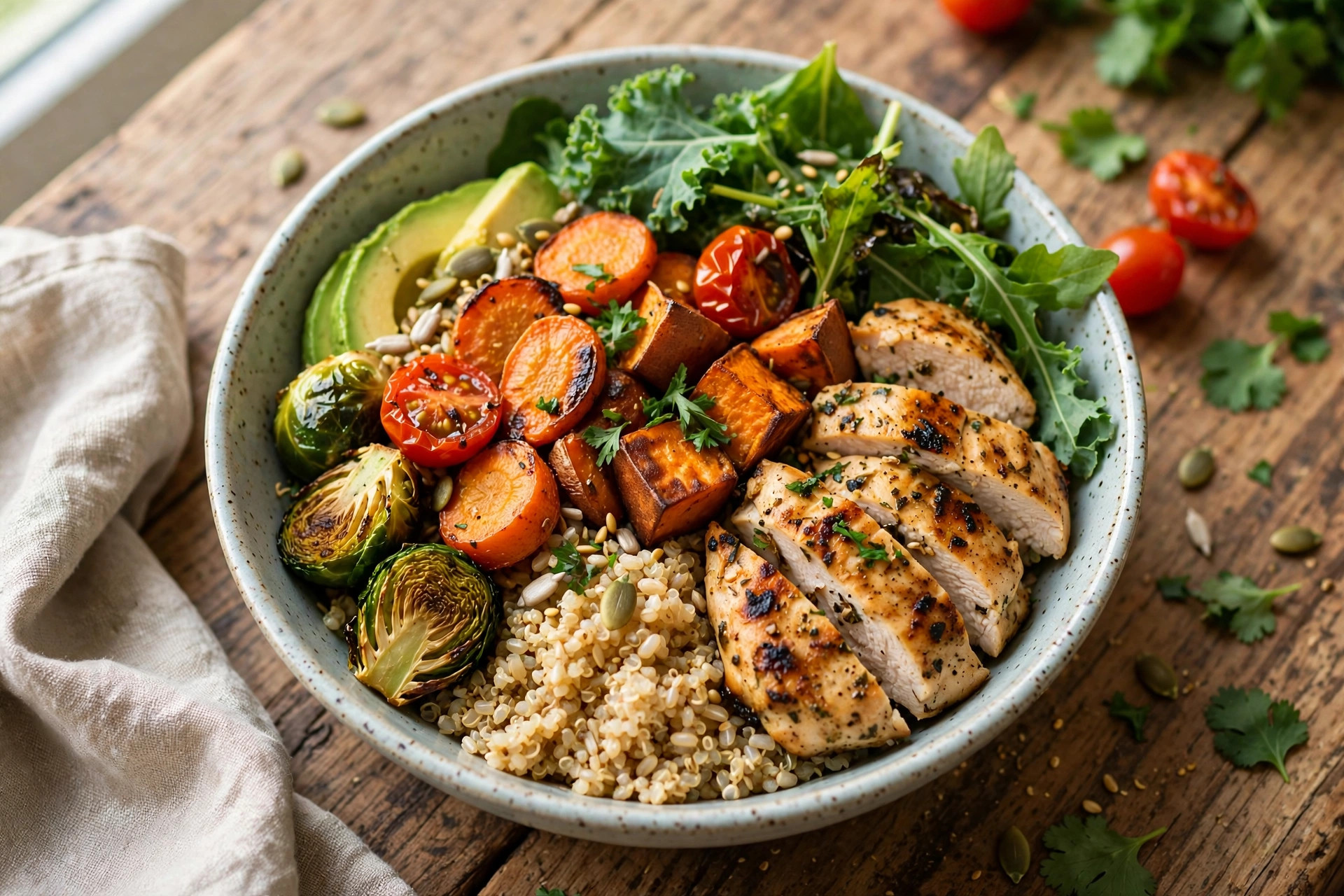
Foods to Include in a Balanced Everyday Diet
A balanced everyday diet is built from a wide mix of vegetables, fruit, whole grains, beans, fish and fermented foods, with plenty of variety and flavour. This guide looks at sixteen everyday foods that are often included in balanced eating patterns, with simple ways to cook and enjoy each one.
Important note: This is general food information only and is not medical advice. It does not diagnose, treat or replace care for any condition. Anyone with high blood pressure, or any other health condition, should talk to their doctor, and should not stop or change any prescribed treatment because of anything written here.
1. Leafy green vegetables
Spinach, kale, rocket, Swiss chard, beet greens and romaine lettuce are rich in potassium and folate, and they add colour and bulk to meals.
How to enjoy them: toss spinach into an omelette, blend kale into a smoothie, make a large salad with lemon and olive oil, or stir chard into soups and stir-fries.
2. Berries
Blueberries, strawberries, raspberries and blackberries are sweet, colourful and rich in plant compounds called anthocyanins.
How to enjoy them: add berries to porridge, make a mixed berry bowl, or freeze them for a cool snack.
3. Bananas
Bananas are a convenient source of potassium and a useful snack or breakfast ingredient.
How to enjoy them: with peanut butter, sliced over Greek yoghurt, or blended into a smoothie. Anyone advised to limit potassium, for example because of kidney disease, should follow their doctor’s advice.
4. Oats
Oats contain soluble fibre, including beta-glucan, and make a filling breakfast.
How to enjoy them: as overnight oats, hot porridge with berries, or blended into smoothies.
5. Beets
Beets are earthy, sweet and naturally rich in nitrates, and they add a striking colour to salads.
How to enjoy them: roasted beets in salads, blended into smoothies, or as a side dish.
6. Garlic
Garlic contains a compound called allicin and is a staple flavouring in kitchens around the world.
How to enjoy it: add one or two crushed cloves to soups, stews, roasted vegetables or meat dishes, or try roasted garlic as a spread. Garlic is a food ingredient, not a substitute for any medicine.
7. Fermented foods and yoghurt
Greek yoghurt, kefir, kimchi, sauerkraut and tempeh provide calcium and, in fermented foods, live cultures.
How to enjoy them: yoghurt with berries, kimchi with rice bowls, or kefir in smoothies.
8. Salmon and other oily fish
Salmon, sardines, mackerel and trout are rich in omega-3 fatty acids.
How to enjoy them: grilled, baked or pan-fried, two or three times a week if you like fish, with vegetables and a grain or salad.
9. Dark chocolate
Dark chocolate with 70% cocoa or more contains flavanols and is best enjoyed in small amounts.
Serving suggestion: a small square, about 20-30 grams, a few times a week as a treat.
10. Beans and lentils
Black beans, kidney beans, chickpeas, lentils and pinto beans are high in fibre, potassium and magnesium, and are an affordable protein source.
How to enjoy them: added to salads, cooked into soups, or made into chickpea bowls and stews.
11. Tomatoes and tomato products
Tomatoes are rich in lycopene, an antioxidant, and are a versatile base for sauces and salads.
Best forms: fresh tomatoes, tomato paste, tomato juice, or low-salt marinara sauce.
12. Watermelon
Watermelon is refreshing, hydrating and a source of citrulline.
How to enjoy it: fresh slices, watermelon juice, or added to fruit salads.
13. Root vegetables
Sweet potatoes, potatoes, squashes and carrots are filling, versatile and rich in potassium.
How to enjoy them: roasted, mashed, or in soups and stews.
14. Pomegranate
Pomegranate seeds and juice are tart, colourful and rich in plant compounds.
How to enjoy it: scattered over salads and yoghurt, or as a small glass of juice.
15. Celery and celery seeds
Celery is crisp and low in calories, and celery seeds add flavour to soups and stews.
How to enjoy them: added to salads, made into juice, or used as seeds in soups.
16. Nuts and seeds
A small handful of nuts or a spoonful of seeds adds crunch, healthy fats and protein to many dishes.
How to enjoy them: over porridge, in salads, or as a snack.
Foods to keep to a minimum in a balanced diet
It is also helpful to keep very salty and heavily processed foods occasional rather than everyday: excess salt, fast food, processed meats, canned soups, chips and packaged snacks, frozen ready meals, energy drinks, and sugary foods and drinks.
Sample day of balanced eating
Breakfast: Blueberry and flaxseed porridge, with herbal tea or lemon water.
Mid-morning snack: Banana or a handful of nuts.
Lunch: Salmon salad on mixed greens with tomatoes and olive oil dressing, with a side of beets.
Snack: Greek yoghurt with berries.
Dinner: Lentil or chickpea stew with steamed greens and sweet potato.
Evening treat: A small piece of dark chocolate.
Everyday habits that support balanced eating
- Daily walking
- Drinking enough water
- Reducing stress where possible
- Limiting added salt
- Getting 7-9 hours of sleep
Summary
Balanced eating does not require expensive supplements or complicated diets. Building meals around the simple, real foods above, with plenty of variety, is a practical way to eat well day to day.
Please note: this article is general food information only and is not medical advice. Anyone with high blood pressure should talk to their doctor.